Clinical Studies Show These 4 Natural Compounds May Support Healthy Blood Sugar by Targeting Pancreatic Inflammation
⚠️ Limited availability: Watch the presentation before it's taken down →
Type 2 diabetes affects over 37 million Americans and more than 500 million people worldwide — numbers that have roughly doubled since 2000. Despite the availability of numerous pharmaceutical treatments, many patients struggle to achieve stable, long-term blood sugar control. A growing body of peer-reviewed research suggests that one reason for this may be the role of chronic inflammation — particularly in the pancreas — as an underlying driver of insulin resistance and beta-cell dysfunction.
This has led researchers to investigate natural compounds with documented anti-inflammatory and glucose-regulating properties. Four ingredients in particular have accumulated substantial clinical evidence: cinnamon extract (rich in polyphenols), berberine HCl, Gymnema sylvestre, and alpha-lipoic acid. Below, we examine what the published science says about each one.
1. Cinnamon Polyphenols

Cinnamon has been used in traditional medicine for centuries, but rigorous clinical investigation of its effects on blood sugar is relatively recent. Cinnamon contains unique polyphenolic compounds — particularly type-A proanthocyanidins — that have been shown to enhance insulin receptor activity and improve glucose uptake in cells.
A 2024 crossover trial conducted at the UCLA Center for Human Nutrition used continuous glucose monitoring to track the effects of 4g daily cinnamon supplementation in adults with prediabetes. Participants receiving cinnamon showed significantly lower 24-hour glucose concentrations compared to placebo (p < 0.001), as well as reduced glucose peaks after meals.
Researchers attribute these effects primarily to cinnamon's high polyphenol content, which appears to improve insulin sensitivity through multiple pathways — including activation of insulin receptors, modulation of glucose transporter proteins, and reduction of inflammatory markers like C-reactive protein and TNF-alpha.
2. Berberine HCl
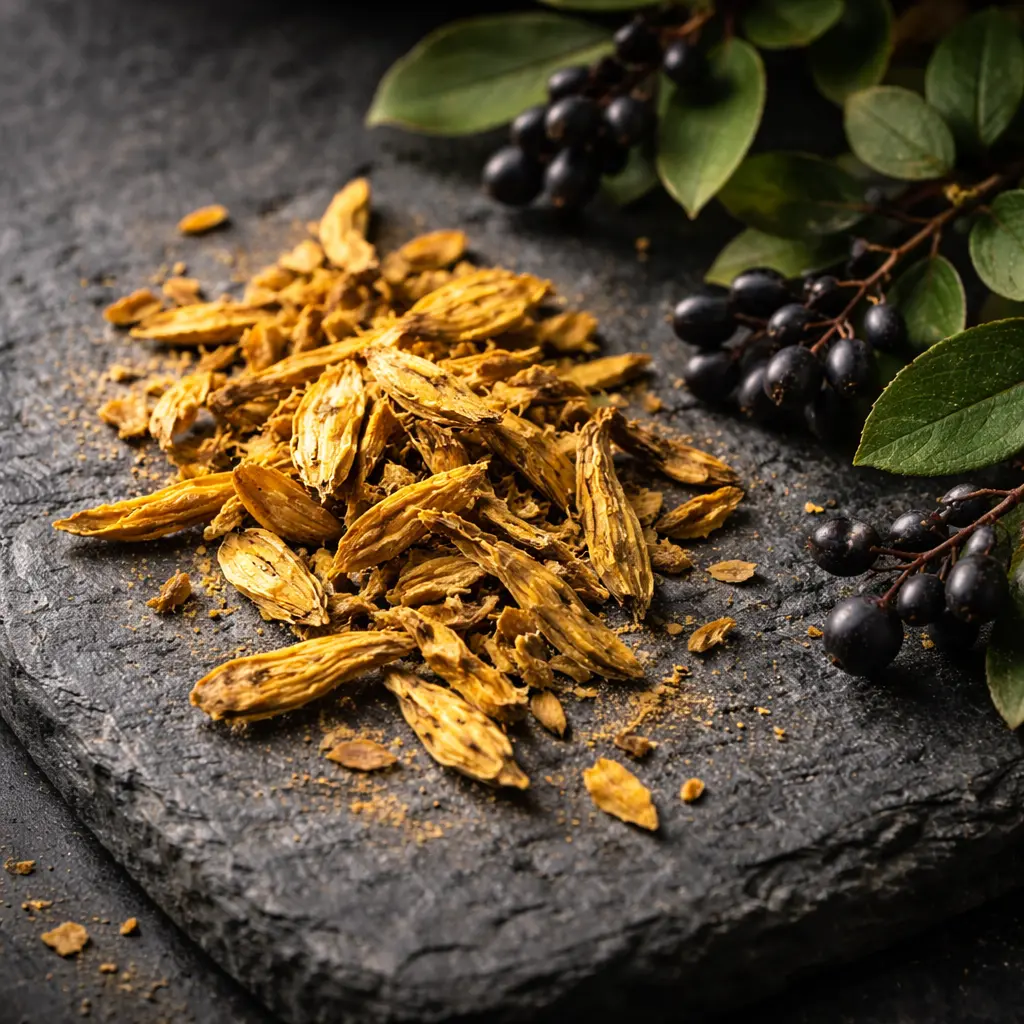
Berberine is a naturally occurring alkaloid found in several plants, including goldenseal, barberry, and Chinese goldthread. It has been the subject of extensive clinical research for its effects on blood sugar metabolism.
A separate pilot study found that berberine monotherapy reduced HbA1c from 9.5% to 7.5% and fasting blood glucose from 10.6 to 6.9 mmol/L over three months. The researchers noted that the magnitude of blood sugar reduction observed in the berberine group was in a similar range to that seen in the metformin comparison group, though the two compounds operate through fundamentally different biological mechanisms — berberine primarily through activation of AMP-activated protein kinase (AMPK), a metabolic master switch that enhances cellular glucose uptake, reduces liver glucose production, and improves fat metabolism. This is a preliminary finding from a single pilot study and should not be interpreted as therapeutic equivalence between berberine and any prescription medication.
A 2024 meta-analysis of 50 studies involving 4,150 participants confirmed these findings, concluding that berberine has significant potential for supporting blood sugar management both as a standalone and combination therapy.
3. Gymnema Sylvestre
Known as the "sugar destroyer" in Ayurvedic medicine (its Hindi name, Gurmar, literally means this), Gymnema sylvestre has a unique mechanism of action: its active compounds, gymnemic acids, have a molecular structure similar to glucose. This allows them to temporarily block sugar receptors on taste buds (reducing sugar cravings) and — more importantly — on intestinal walls (reducing glucose absorption).
Preliminary research published in the Journal of Clinical Biochemistry and Nutrition suggests that Gymnema may support pancreatic cell health, though this area of study is still in its early stages and requires further clinical validation. If confirmed in larger trials, this mechanism would represent a fundamentally different approach from medications that simply increase insulin output from existing cells.
4. Alpha-Lipoic Acid (ALA)
Alpha-lipoic acid is a naturally occurring antioxidant that plays a crucial role in mitochondrial energy production. It has been studied extensively for its protective effects in diabetes — particularly regarding diabetic neuropathy, the nerve damage that causes pain, tingling, and numbness in the extremities.
Beyond neuropathy, ALA functions as a powerful antioxidant that crosses the blood-brain barrier — unusual for antioxidants — making it uniquely positioned to combat the oxidative stress that both drives and results from chronic hyperglycemia. Studies show it helps regenerate other antioxidants in the body, including glutathione and vitamin C, creating a cascading protective effect.
The Synergy Factor
While each of these compounds has demonstrated meaningful benefits individually, emerging research suggests their combined effect may be considerably greater than the sum of their parts — a phenomenon known as synergy or "super-additive" response.
A 2025 randomized, double-blind, placebo-controlled trial published in PubMed investigated the combination of berberine and cinnamon supplementation in type 2 diabetes patients. The researchers found that the combination improved multiple cardiometabolic risk factors simultaneously — an outcome consistent with the different but complementary mechanisms of action.
The logic is straightforward: cinnamon polyphenols address inflammation at the source; berberine activates cellular metabolic pathways that improve glucose uptake; Gymnema sylvestre reduces glucose absorption and may support pancreatic cell health; and alpha-lipoic acid provides systemic antioxidant protection. Together, they target the problem from multiple angles simultaneously.
A Formulation Based on the Research
A research team has developed a liquid formula that combines all four of these compounds in specific ratios based on the dosages used in clinical studies. The liquid delivery format was chosen deliberately — research suggests that liquid supplements offer superior bioavailability compared to capsules, as the active compounds bypass the need for dissolution in the stomach.
The team's full presentation explains the science behind their formulation, the clinical evidence supporting each ingredient, and what users are experiencing.
Watch the full scientific presentation →References
- Bowe B, Xie Y, Li T, Yan Y, Xian H, Al-Aly Z. "The 2016 global and national burden of diabetes mellitus attributable to PM2·5 air pollution." The Lancet Planetary Health. 2018;2(7):e301-e312.
- Guo J, et al. "The Effect of Berberine on Metabolic Profiles in Type 2 Diabetic Patients." Oxidative Medicine and Cellular Longevity. 2021.
- Asbaghi O, et al. "The effect of cinnamon supplementation on glycemic control in patients with type 2 diabetes mellitus." Phytotherapy Research. 2023.
- Devangan S, et al. "The effect of Gymnema sylvestre supplementation on glycemic control in type 2 diabetes patients." Phytotherapy Research. 2021.
- Mijnhout GS, et al. "Alpha Lipoic Acid for Symptomatic Peripheral Neuropathy in Patients with Diabetes." International Journal of Endocrinology. 2012.
- Zhu H, et al. "Effect of cinnamon spice on continuously monitored glycemic response in adults with prediabetes." American Journal of Clinical Nutrition. 2024.
- Yin J, Xing H, Ye J. "Efficacy of berberine in patients with type 2 diabetes mellitus." Metabolism. 2008;57(5):712-717.
- Burkart K, et al. "Estimates, trends, and drivers of the global burden of type 2 diabetes attributable to PM2·5 air pollution, 1990–2019." The Lancet Planetary Health. 2022;6(7):e586-e596.
Individual results may vary. The research cited above is for educational purposes and does not constitute medical advice.